
Welcome to the Mathematical World!
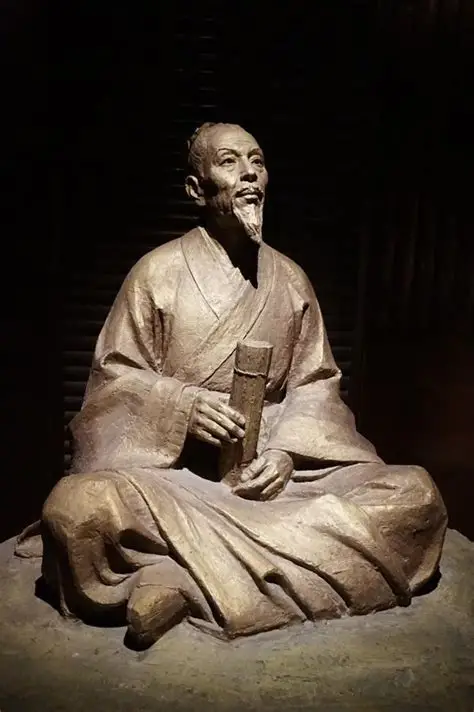
Zu Chongzhi
Master of Pi and Chinese Astronomy
Zu Chongzhi (429–500 AD) was a Chinese mathematician, astronomer, and engineer whose contributions left a lasting mark on the scientific tradition of ancient China. He lived during the Liu Song and Southern Qi dynasties — a period of rich cultural and technological advancement. Zu is most famous for his extraordinarily precise approximation of π (pi), a record of accuracy that stood unmatched for nearly a thousand years.
Early Life and Education
Born into a scholarly family, Zu Chongzhi displayed remarkable intellectual ability from an early age. His father and grandfather were both known for their academic achievements, and Zu received a thorough education in the Confucian classics as well as mathematics, astronomy, and engineering — the very fields where he would excel.
Mathematical Achievements
Zu Chongzhi’s most celebrated achievement was his approximation of π to between 3.1415926 and 3.1415927. This level of precision, known today as the Milü approximation (355/113), was unparalleled in the ancient world and remained the most accurate value used anywhere for over a millennium.
Although the exact details of his method are unknown, historians believe Zu may have used polygonal approximations similar to those of Archimedes, refining them through iterative calculations — all without the tools of modern calculus or computation.
Contributions to Astronomy
Zu worked extensively on astronomical calculations, often collaborating with his son, Zu Gengzhi. Together they developed the Daming Calendar, which corrected inaccuracies in earlier Chinese lunar-solar calendars. This calendar measured the tropical year as 365.24281481 days — remarkably close to the modern value of 365.24219878 days.
Engineering and Inventions
Beyond pure theory, Zu Chongzhi was a skilled engineer. He designed water-powered machinery and mechanical devices, showing a keen interest in applying scientific knowledge to practical problems. His engineering expertise earned him positions at the imperial court, where he was entrusted with important astronomical and technical projects.
Legacy
Although many of his original works have been lost, Zu Chongzhi’s influence endured through Chinese mathematics and astronomy. His innovations in numerical methods, calendar design, and mechanical engineering inspired generations of scholars. Today, he is celebrated both in China and worldwide as a polymath whose intellectual achievements bridged theory and application.
Zu Chongzhi’s precise value for π and his astronomical insights remain enduring symbols of ancient China’s scientific ingenuity — proof that brilliant minds can transcend the limits of their time.

All rights reserved by the Mathematical Unity
Contact: +8801400044645
Email: mathematicalhorse1453@gmail.com
Our Discord Server: Mathematical Unity [Ulus Riyadiyat]